The closure of the Occupy London
camps is a closing down of democracy.
Police and baliffs in charge of
evicting the protestors moved in on the St Paul’s site last night, February 27th,
and continued to clear the area of demonstration this morning. The move comes
following a court ruling to have the camps and occupants disbanded.
Appeals to the decision were
denied in a move that only adds to the gravitas and reasoning behind the goals
and aims of those in charge of the movement.
Occupy London set up shop against
capitalism in October last year and has remained a permanent fixture just a
little way off the London Stock Exchange for more than four months. Following
the example of protests in America, the sit-in phenomenon took off worldwide,
and had established itself as part of the landscape outside St Pauls in the
capital.
However, the clearing of the
sites took little time last night, as many simply moved on as a large force of
police closed in on the area. Some were resolute and built a small structure to
stand their ground, but within a few hours, this too was dismantled. All that
remains of the proud symbol of anti-corporation greed is being ‘cleansed’ in a
deep clean. I say ‘cleansed’ because the root of the issue has not been dealt
with.
Mayor Boris Johnson took the
opportunity to say that he is “glad that finally the law has taken its course”.
It would appear that the mayor oversteps his position as a leader of a free
government, by suggesting that this prevention of free demonstration is a
positive act.
Within the first week of its
occupancy, the demonstration had been contained and caused little, to no,
disruption in the area: instead blending into the background, heckling
peacefully at professional businessmen and women who were the cause of their
misery.
London’s trade remained
undisrupted.
Now, with the removal of tents
and sleeping bags from the St Paul’s steps, but a claim that “The corporation
made it very clear that they have nothing supposedly against protest”, there is
all the more ammunition to mount daily assaults on the London Stock Exchange
area.
Moving the protesters from their
camp simply provides the motivation for the activists to move onto the next
stage of campaigning, more disruption, more force and presence outside the
buildings of the exchange. After all, the only part of the protest with which
the law took umbrage was the make shift settlement and sanitation.
Daily demonstrations provides
more of the furore and direction needed to ensure a more noticeable effect
occurs, a more positive change. After all, if the people working in the Square
Mile are disrupted daily, so trade is impacted.
Although there is nothing of the
physical camp remaining, certainly its ideas and ideals are still bubbling with
zeal around the streets of the capital. The greatest achievement of the camp
came in its early days, when there was realisation that those regulating the
money, the trade, the jobs, could be wrong-footed and undermined. If the
removal of the camp is to reignite this spark, then the authorities could have
unwittingly done more harm than good for their cause.
Whilst I do not agree with the
removal of the camp, as it brings with it a sense of oppression, or underhand
court dealings, there was certainly for the most part no cohesion between public
and protestors. Within ten days, the public interest had dimmed and the camp
was not necessarily speaking for a majority.
With undefined goals, the next
step for the campaigners should be to regroup and outline some aims before
continuing. Whilst the group had noble sentiments in the time of credit crunch,
recession and high unemployment, there was no long-term solution to capitalist
flaws.
Even if the Occupy movement was
not wholly formed, it is the closure of camps that is the most striking in a
country of free speech. As a society broken by capitalist misdemeanours, even
should we not agree with what is said, we should defend the right to say it.
Some 50 years after the enormous smash
of James and the Giant Peach, Roald Dahl’s success continues: his books are
some of the most enduring and timeless works of literature that have been
published in the English speaking world. This is all the more remarkable for,
unlike his contemporaries such as Tolkien, the vast majority of his works were
written for children.
Exploring the niche of children’s
fiction, we are frequently greeted with works such as Horrid Henry and Captain Underpants:
outspoken and outlandish characters for the 21st century who,
although having excellent selling records for a short period, are likely to
fade out of memory within a short space of time.
The reason? Well these characters
are all interchangeable: those who are good often triumph. Even Horrid Henry
has his angelic traits. Besides, he is unable to match his rebel without cause
counterparts, Dennis and Gnasher.
Children’s entertainment is
constantly evolving to be more ridiculous, extreme and comedic on television.
Books and comics aim to compete. However, all these changes leave out a very
human element and are achieved only as 2D outlets: they are only believable on
the screens at home or on the pages of the book.
Dahl, however, takes home truths
as the fundamental basis of his tales.
Worryingly, the truths of Dahl’s
youth are of the loss of a father at just three years old and his sister a
short while afterward. Add a lengthy period being beat and punished for the
most ridiculous and petty of problems when sent off to boarding school and you
have quite the tainted individual. If this was not troubling enough, the
adolescent Dahl was plunged into a world of war and served in the army.
There are few authors who have
killed. Of these, the number which constitutes children’s authors is slim to
only-occupied-by-Dahl.
Why should this man of a dark and
cruel past be interested in branching into the domain of storytelling? The
question is even more intriguing if we consider his successful publication of
‘Boy’. Or is it?
Tales of the misspent days that
Roald enjoyed were just as interesting to adults and children alike. Naturally
for different reasons: yet this divide in reason really grounded Dahl’s
passion. An adult would pick up ‘Boy’ upon its publication and be moved by the
fact that there was some violence, but would maintain an air of decorum. The
logic of the adult would be ‘these things happen’. Although the book may evoke
some memories of their own childhood, it would read as a whiny recounting of
some punishment they probably would advocate as deserved and measured.
Meanwhile, the true recollections
would both scare and entertain a child in equal measure. They would conjure up
images of wicked teachers and hard punishments that were such fixed parts of
their day, and yet seemed so far away and mystical with the generational
changes in the education system.
Moreover, Dahl would be a gateway by which an adult understood the zany
apprehension of children that is so easily forgotten and abandoned by adults
once they reach adolescence.
Hell, even Roald Dahl by his own
admission lost a great deal of interest in his own children once they reached
their teens.
Each person probably has their
own favourite from the diverse and so enriching collection of Dahl’s stories
for youngsters. Of course, while his material explicitly for adults remained
popular, the different threads so intricately weaved in many of the children’s
stories spoke to all generations, as did Blake's imaginative illustrations, atypical of scenes in Victorian novels printed in newspapers. The grotesque and the macabre are deeply probing of human nature.
To illustrate this gulf in
division between how a child and an adult may perceive a book, let us briefly
consider a few of Dahl’s most cherished works:
Book
Child’s view
Adult’s view
The BFG
The Bogeyman exists in some form or other.
Children do not like snozcumber. Or any other
vegetable.
Matilda
When a person is bad, that person deserves to be
punished. Ergo, children can punish parents.
Take the greatest of care in your child’s
welfare: they could turn out to be a reflection of the Trunchbull.
Charlie and the Chocolate Factory
Too much chocolate is, in fact, bad for you.
Despite the belief of some important people,
children should be seen and heard. Look at how far the economy depends on
them.
The Witches
An ugly person is a witch. Fact.
A world with children is a better place than a
world filled with vermin. Imagine the pest control issues. Besides,
youngsters help you out in your old age.
George’s Marvellous Medicine
The bath is a perfect place to experiment. It
needs to be more interesting in there anyway…
Invest money wisely for University. It is a
practical outlet for George’s genius. We, however, are not.
Firstly, there is the most
evident and amusing element, which is the ridiculous nature of his characters
and storylines. James and the Giant Peach features aunts who make worse parents
than those of Baby P, and overgrown spiders, ladybirds, stick insects and
crickets as inhabitants of an oversized legume. Oh and they’re being hunted by
a rhinoceros. Naturally. George’s Marvellous Medicine has a trickster brew his
own remedies in the home on an epic scale, whilst a world made of chocolate is
on the menu in Charlie And The Chocolate Factory. Sweet revenge.
Each of these episodes play on
two interlinked themes: mild horror and humour. The careful balance of the two
appeases all the desires of human nature in a single bound: this crux of
literature allows us an insight into our darkest capabilities in extreme situations.
Even if they are somewhat tentative ones, where teachers throw children in the
Chokey.
Besides, when there’s a
fantastical world where animals are friends in The Giraffe, The Pelly and Me,
or when you have a devastatingly magic finger, who needs to care about reality?
Well Dahl actually does. And this
ensures the longevity of his tales. After all “A little nonsense now and then,
is cherished by the wisest men.” [Roald Dahl]
For example, we could take
classic Fantastic Mr Fox, in which the book’s eponymous hero takes on the
dastardly Boggis, Bunce and Bean (one fat, one short, one lean). Entertaining
as the plights of an animated fox and his cohort are, many look over the book
as the control of world supply as each farmer specialises in a different area
of agriculture. Therefore, research suggests that the tale is one of Capitalism
vs Communism: the cunning fox ensuring that all his friends share food,
regardless of wealth, whilst the greedy farmers want payment and a hierarchy.
Communism appears favoured: but then the war robbed Dahl of many of his dreams.
Moreover, there is also the view that these three men are those who were in
charge of the pivot of world power in early 1945: one fat, Churchill, one
short, Stalin, one lean, Roosevelt. Whimsical characters may fascinate, but
relating these to problems influenced by world politics leaves a lasting
impression.
Whilst this layer of Dahl sounds
overly serious, this man had been shaped by experiences of loss, child abuse
and war crime. Why should his works not encompass those shady areas that are
often greyed out for children?
In this way, Matilda makes a
stand for children everywhere: abusive parents do not recognise her abilities
and a cruel Trunchbull menaces and demeans all those who display any talent:
education taking place in a restricted environment, as if mechanically. Child
protection issues are the focus for any adult. Oh and the idea of feminism. Mrs
D, Mrs I, Mrs FFI, Mrs C, Mrs U, Mrs LTY. Why exactly are they all married? Is it to reflect that married women are quite ignorant of their children, sending them to schools that taunt, tease and punish? After all there are right minded single women that are able to perfectly function in society and have many aspirations: cue Miss Honey, not Trunchbull.
The Vicar of Dibbleswick
introduces a character with an issue akin to that of dyslexia, by which he says
a great many of his words backwards. Whilst this provides domain for the most
amusing and ridiculous of addresses in his sermon, an adult will perceive the
need to accept many people, despite supposed flaws, in an age that saw the rise
of political correctness.
Esio Trot sehcaet su s’ti reven oot etal ot
llaf ni evol. Or rather, tortoise teaches us it’s never too late to fall in
love. The most ridiculous and bizarre of love stories; through yonder balcony,
not daylight, but turtle will break. And then the mad middle aged woman
downstairs will fall desperately in love with you and you won’t have to be
crazy old turtle man. Oh, and it’s never too late to follow your dreams.
Important lesson there.
So we should consider three of
the more important life lessons Roald Dahl bestowed upon us, each reflecting
differently on child and adult:
1.“What
I mean and what I say is two different things”.
2.“Never
do anything by halves if you want to get away with it. Be outrageous. Go the
whole hog. Make sure everything you do is so completely crazy it's
unbelievable...”
3.“And
above all, watch with glittering eyes the whole world around you because the
greatest secrets are always hidden in the most unlikely places. Those who don't
believe in magic will never find it.”
Such duality is the most lasting
aspect of the Roald Dahl’s work. “I'm wondering what to read next."
Matilda said. "I've finished all the children's books.” All she need do,
is read them again. The story is never the same twice, because the world
shaping it will have changed.
Whilst this past week has seen many social divisions arise within our own country, their importance and depth is relatively dwarfed by those of some of our European counterparts on the mainland. Rioting and violence nationwide has triggered a plethora of responses in an attempt to comprehend any reasons which could support such actions. Although there are many lessons to be learnt of the divisions plaguing English society, the fragile illusion of unity that undermines other nations is all too striking.
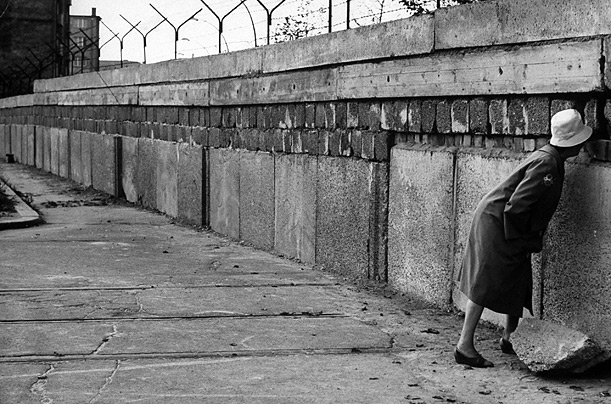
Today, Germany, a country of total unity in the modern world for only some brief 20 years, commemorates – or rather commiserates – the construction of the Berlin Wall half a century ago; a move marking one of the most consistently hostile environments of propaganda and restriction upheld in a supposedly sophisticated and developed 21st century world.
Between 1961 and 1989, the Berlin Wall stood to separate the West from the East of Europe: to separate ideologies; to separate economies; to separate neighbours and countrymen amidst a political climate of rivalry.
Capitalism and Communism countered each other throughout the period that became known as the Cold War, but the harsher realities of this were for those behind what has become referred to as the ‘Iron Curtain’.
East Germany in particular suffered more than a number of other countries in the region due to the sudden and definite manner in which the land was ripped apart without thought for consequence of lifestyle, recovery from the war or global wellbeing. The wall became an icon of what was to many an inexplicable act of social warfare.
However, despite the passing of more than two decades since the fall of the wall, Europe is still haunted by its spectre. Whilst the reintegration and orientation of East and West has seemingly gone forward smoothly, it is much more a small scale reflection of the somewhat slower integration of Eastern and Western domains in a globalised world.
For many, the wall was a restriction similar to that suffered by livestock. A violation of freedom not seen amongst humans for centuries.
Reaching into the twenty first century then, such primitive restriction now holds the key to psychological and economical divisions. Questions as to abandonment, sacrifice and how far a country cans be expected to support its citizens: particularly following one of the most turbulent periods in continental history. The scale of the issue effects life in many different ways.
First of all, there are those for whom life behind the curtain ensured that life without it is ironically too difficult. There a large minorities in the East that do not associate with those Germans from the West of their own country. “I cannot name a single West German with whom I socialise now - really, I can't” admitted Brigitta Heinrich to a Russian news agency. For many, the repeated ideological mentality that was enforced in daily life means that the ideas of generations raised either side of the wall are simply not compatible and so relations are strained.
Of course, there are those who suffered indirectly. If one was believed to be related to an escapee, or attempted escapee, then one may be subject to all types of humiliation: eviction, unemployment, rejection from social groups etc. Life had to be dedicated to one idea in the East.
For those who died in their attempts at a life of freedom, a glorified and much fantasied ideal of the West was the prime reason for their final journey. Debates rage as to the total numbers of deaths caused by gunmen who kept constant sentry over this, the most ridiculous of constructions. At least 136 are known to have been killed but victims' groups say the true number is more than 700.The first victim was thought to be Guenter Litfin on 24 August 1961 and the last Chris Gueffroy on 6 February 1989.
To this day, there are continued economic divisions, lifestyle divisions and belief divisions. A continent divided. A country in two.
At ceremonies across the country today, many paid their respects to what has become a defining moment in the recent history of the reforging of a nation. Almost too prophetically, leader claims that Germany was under attack from surrounding countries in Europe turned to be truth, as its assets were split and its citizens left with a grand sense of moral shame.
Mayor Wowereit said the capital was remembering the "saddest day in its recent history". At a ceremony at a former crossing-point, President Wulff said the wall had been "an expression of fear" of those who created it.
Whether an image of fear or power, the wall is a testament to the psychological fancies of leaders worldwide.