Showing posts with label Labour. Show all posts

Thursday, 24 January 2013

Promised Land of Change: Israel's Elections and Peace

"If you're in Israel today, vote as if your life depends on it. It does."

Scrolling my Twitter feed, I find these rather haunting words from the Hareetz newspaper, half a world away. As far as tactics go for convincing people to vote, perhaps a tad extreme. Such headlines would certainly not work in a UK election. Yet is it an over-reaction of the Israeli state, or a reaffirmation that the Middle East is still a cause for tension, when media attention is attracted to the US and Obama’s inauguration?

So renowned are the disputes between Israel and neighbour Palestine that Western media appears to have all but forsaken any coverage of the issue. Last year when a period of peace was ended, images of rockets, interceptors, collapsing buildings and wounded infants once more flooded the screens of the UK. But the focus was short lived and prompted little in the way of assistance to the two countries.

Last week, as part of his second inauguration, Obama spoke candidly of freedom and warfare in relation to the US. As the leading force in intervention, the American president voiced his opinion that "We do not believe that in this country, freedom is reserved for the lucky, or happiness for the few." Of course, this first and foremost is a sentiment of American equality: a modern revival of a president advocating the American Dream. Yet, it suggests a pragmatic belief in the need for a practical approach in aiding other countries, whose desolate and poor do not have the right to freedom or happiness from constant threat and terror.

The election results in Israeli may in fact go some way to inducing Western aid once more. The mood of the electorate has certainly swung, and in the process of forming a coalition government, the fine balance of parties views will need to be negotiated and compromises and truces reached. Whilst the American politician Tip O'Neill once famously observed “that all politics is local.”, here in Israel, politics is more enmeshed in social-cultural-international relations than in any other region on the globe.

Naturally, it appears that some have heeded the warning to vote in accordance to live. Whilst the incumbent president won the most votes, he does not have a majority. In fact, the real victor may be Mr Lapid’s party, Yesh Atid (There is a Future), running for the first time. He earned 19 seats in the 120-seat parliament, against 31 for the Likud-Beitenu party, led by Binyamin Netanyahu, who is still expected to retain his post. But the centralist party now hold a powerful position in the next term of office.

If the party comes together with Netanyahu, there is prospect for a more proactive approach to peace in the region. In previous elections, the extremist parties had received significant votes. But with Yesh Atid and the Labour party now performing well and instigating a new approach to peace and politics in the region, a lot more has to be done to appease the emerging young middle classes that have temperaments and logical approaches that mirror more closely Western ideals.

Netanyahu told weary but elated supporters early Wednesday he plans to form a government "as broad as possible" and pursue his goals with "many partners."

"I believe the results of the election represent an opportunity to make changes that the people of Israel want to see and that will serve all citizens of the state of Israel," he said. "I plan to lead those changes and to that end we must establish a government that is as broad as possible, and I've already started out on that task."

Should the Prime Minister prove true in his word, this may change the attitude of Western democracies that had written off the Israel question as a futile area of irresolvable conflict. Of course, none of this precludes the antagonism of Palestine and whether they too are ready to engage in a new series of discussions to resolve the theological problems that have blighted two nations for generations.

Of course, the leaders of the EU and the US will remember that it was the Palestinian leadership, under Yasser Arafat, that rejected the generous offer of peace talks and improved relationships by Prime Minister Ehud Barak and President Bill Clinton in 2000-2001, and similar proposals were again rejected just a few years ago. Should the Palestinian leadership refuse to host any talks in the light of this new national outpouring of feeling in Israel, both countries will have failed to capitalise on a potentially pivotal moment in the debate.

Progress has been galvanised in Israel, and now the leaders of Western democracy need respond positively. Media should showcase more closely the development of the Middle East crisis to add to pressure for a resolve. In an age of integrated social media, internet and 24 hour news, the Israel-Palestine conflict is still a black hole of non-information. If only we were as determined to vote as though our lives depended on it, maybe we would have more empathy with the citizens of Israel.


Thursday, 1 December 2011

Strike One.


Yesterday’s mass strike, the largest in Britain since the nicknamed ‘Winter of Discontent’ in the 70s, was branded “a damp squib” by the Prime Minister David Cameron.

However, walking around my locale in York, I couldn’t help feeling a certain incredulity at the statement. Living in a town known for its middle class, Conservative electorate, even here the picket lines were drawn in force. Reduced bus services, fewer libraries, doubtless there were significant reductions in emergency services. And of course, the swathes of 9 year olds wondering the streets at one in the afternoon were sign of the backing of the educational sector.

The strike over pensions is both justified and seemingly fool-hardy. For those who have been contributing to their retirement schemes for some decades, the idea of moving the goalposts is simply undermining to a true sense of fair game: life decisions may have been different, money spent either more shrewdly or liberally. In harsh economic times, the dependence on a pension, its access and ability to enjoy one’s later life is rather an oasis amidst political turmoil.

Of course, the only way by which to ensure there is sufficient circulation of various economic funds is to push back the pension age, due to the growing number of older people. I do not mean to make this sound a point of begrudgment: rather, those who have created growth for UK markets and contributed to society should indeed be at liberty to enjoy their lives as they wish: not constrained to a job all the longer.

In fact, the government’s propositions would ensure that the average UK man had barely a decade to live once he had retired. But, statistics tell us those in cities could expect even less time: a Glaswegian male averaging a mere 69 years.

Yet, with an expanding retirement bracket, the current system is undoubtedly under strain, as slowing birth rates and economic decline generate less available money.

As such, over two million people from various public sectors took to the streets, with various marches and demonstrations affecting the capital. Whilst the government says there is no room for negotiation, and their offer is fair, should the stand offs continue to cause such disruption, outlines other than the changes proposed for 2015 will undoubtedly be announced.

The strike is estimated to have cost a minimum of £500 million. Such money is a vital asset not only to the economy, but to the ailing pension schemes that need be funded. As such, the government only hurts themselves in continuing with this action.

However, parliament officials are divided themselves. Labour, usually the political party most associated with the social class movements, have not supported the movement publically and quite a large number of their members crossed the picket lines yesterday and entered Westminster regardless. Although Ed Miliband continues to have furious debates with the PM (see yesterday’s Prime Minister’s questions) he only suggests the calls of strikers need be understood. Not supported. And the ambivalent feel is obvious across a number of high profile people due to the inevitability for change

Never one to miss an opportunity to make some left field remark, none other than Jeremy Clarkson took to the spotlight to argue that all strikers ought to be executed in front of their families. Yeah, nice one Jeremy. Work when the boot fits, but not if you have to relocate Top Gear despite an unnecessarily huge wage.

Today marked the first talks between top level union officials and government members since the 2nd November: yet this does not necessarily represent any progress. Rather, hearing how far the strikes were successful will determine further strategies for the likes of Unison, Unite and TUC. The general secretary of the TUC, Brendan Barber, said if agreement could not be reached, further action could follow.

Yet the risks are huge. Economic impacts, social welfare problems, the ability to keep a public on the side of Union agenda. Even when the dispute ends physically, there will remain huge dissatisfaction. Since Britain finds itself in a position of job cuts, spending cuts and social divisions that will last well into the 2020s, even a recompense of a ‘fairer’ pension cannot abate the need for action. August’s riots are proof enough of the need to be weary of all social fragments.

David Cameron told ITV1's This Morning: "Striking isn't going to achieve anything, particularly while there are negotiations ongoing." However, there weren’t negotiations ongoing. Cameron’s own ignorance may in fact paint his own government the damp squib in this battle of wills. He continued "The job of the government is to try to explain to people calmly and reasonably how we are going to come through this", and whilst his philosophical airs are all true, his lack of guidance to a resolution equally demonstrate the flaws of his parliament.

The only fair way to push back pensions is to do so for those not yet 16. But why should those without a parliamentary vote be punished? Are pensions a case of human rights then and if so who has the power to determine a justified balance between returned wage and the biological clock?

Tuesday, 27 September 2011

Miliband's War.


Labour once again proclaims itself new as the annual party conference gets underway in Liverpool.

In the largest speech of his leadership so far, Ed Miliband announced that there should be action taken against those companies who could be described as “predatory” and “asset stripping”. Mr Miliband outlined his latest vision for a greater Britain, by rewarding smaller companies and “grafters”, whilst also tackling a great number of issues either side-stepped or taken in the wrong direction by the current coalition.

Being elected leader of the party just over a year ago, Miliband is having to make a name for himself and trying to re-establish trust for his party. Although there are no explicitly new policies or announcements, his interview prior to the conference with Andrew Marr suggested that there need be a new stance.


Of course, this is to appear as contrary to the Tory opposition as possible: support for the coalition recently having plummeted according to some polls, particularly for Nick Clegg’s party.

Naturally, as Nick Robinson pointed out, opposition leaders - whether Labour or Tory - declare that they are on the side of hard working people who do the right thing.

In this way, Ed Miliband is pushing ahead with a revival of responsibility.

Almost as if the heralding of a new period of enfranchisement, the Labour leader introduced the initiative fully at today’s conference.

From companies to average citizens, the need to act for one’s community has never been clearer or on such an impressive scale of undertaking. Miliband has argued that companies who offer long term reinvestment and training should have tax rewards: and pointed to Rolls Royce as an example of such an enterprise that should be encouraged.

In addition, the speaker added that “Our first duty should be to help the person who shows responsibility.” He followed up on this by suggesting that those who helped out in their community should reap the rewards through such things as jumping up priority in the housing chain. There need be an introduction of the something for something ideal.

However, many are dissatisfied with this brash approach, insinuating that it was the Labour party themselves that adopted a doctrine of a “something for nothing” ideology and that mantel has continued to spread and debilitate Britons past their spell in Westminster power.

Whilst the speech appears well placed following the backdrop of riots and banking crises, there is belief that the Tory party only served as powderkeg to problems that had been bubbling under Labour administration.

A ComRes poll in the Independent on Tuesday showed 37% of the 1,000 voters questioned said they backed the Conservatives, against 36% for Labour and 12% for the Liberal Democrats. Just 24% agreed that Mr Miliband was a credible prime minister-in-waiting, against 57% who said he was not.

Although Miliband’s speech pledges Labour party to remain the politics of the people and to never again to advantage of the system, Baroness Warsi claims Mr Miliband is not able to promise such.

The Conservative co-chair brought forward the idea that Labour had latterly strangled the small business owners in 2008 through 2010 in particular. Furthermore, the Baroness proved poignant in the statement that "Ed Miliband can't deliver on these promises because his party left the country on the brink of bankruptcy. This is opportunistic rhetoric from a weak leader."

Meanwhile, Ed Balls has unveiled a five point plan for dealing with debt.

The scheme, which he would see introduced following the next elections, would include a VAT cut to encourage growth (similar to schemes trailed by Darling), tax breaks for small firms (not exactly reflected on having economic responsibility) and reinvesting bank bonus taxes in the community.

Whilst Mr Balls acceded to Labour’s previous mistakes, he described the current state of the economy, “the worst in his lifetime” and pointed to current Chancellor, George Osborne, as having the wrong “prescription”. He argued that having a growth plan, rather than a plan of spending cuts, could quickly put a stopper in the vicious circle of deficit and “secure an economic future”.

However, the Labour party has once again affirmed that great swathes of the Tory changes would continue even if they are revoted to power. In this sense, Labour is hiding behind the curtains on a great many of its policies: letting other people carry out the changes and then afterwards showing sympathy without action.

Should the party truly wish to get into power once more, they need stick firm to their principles and act on changes that would not have been introduced. Otherwise, confidence, as well as the economy, will not grow in any forecast. A war of principles vs popularity is underway.

Thursday, 15 September 2011

The Largest Union Movement In A Generation.


With a certain self-rapture, Margaret Thatcher probably regards the latest developments in the news with a certain feel of justification.

Yesterday saw the formal announcement of circulating rumours: that a large number of unions are proposing planned strikes over the coming winter months, all calculated so as to hit the average person, and more importantly the government, with the full force of worker strength.

Four of the largest unions that operate across the UK have already commenced with their balloting. In order to fully plan the events and gage the level of support, each of Unison, Unite, GMB and the Fire Brigades’ Union are starting to draft plans and provide further information so as to ensure a co-ordinated strike action. Adding to the severity of this issue, a further ten unions may consider joining the action according to reports from TUC boss, Mr Brendan Barber.


Such foresight in synchronisation allows a monopolising of major industries and response units: in turn paralysing Britain.

Amongst those likely to strike, disruption comes from nurses, teachers, fire crew services, as well as a great many other skilled professions. Crippling Britain in this way affects all branches of life: ensuring need for extra vigilance in case of emergency, childcare worries and impact on wages earned for the period.

Powder-keg to the sudden outcry is talks regarding changes to pension schemes. Government proposals wish to introduce a revamp to the current system from next April so as to reflect on the growth and sustainability of an elderly generation. With a unanimous vote against the action from TUC, plans to engage a fight back were quickly moved to the forefront so as to have the public voice manifest itself for the government.


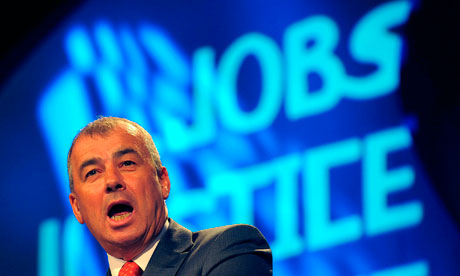
Mr Barber promised that the 30th November would bring "the biggest trade union mobilisation for a generation".

With the prospect of such widespread disruption, some may wonder why we have need of trade unions. The answer, in brief, is that a great many privileges and rights were fought, gained and now protected by their bargaining work. Gaining prominence in the Industrial Period, these unions have helped ensure fair wage, safe working conditions and benefits.


This latest sequence of actions is thus but a continuation of a dedicated group of committee members. Certain citizens may see the unions themselves as wasting money in providing a service that the individual should defend themselves.

Mrs Thatcher could not support such a notion further. Many of the rebellions and riots that cloud her era of power are stained with the taste of union blood.

Continuing to live up to this Tory pragmatic, Chancellor George Osborne branded the proposed movement "deeply irresponsible".


It is simple logic that there must be a reform and revolutionising of the pension schemes in place so as to fully support the mass increase in the over 60 populous. However, such a level of backlash is undoubtedly unprecedented given the need to overhaul the current system or risk jeopardising economic recovery in the long-term due to benefit commitments.

Osborne reasoned that "The offer on the table is for public sector pensions that are far better than most in the private sector and fairer to taxpayers." and stubbornly rebuked action as contradictory to the benefits of the country.

Interestingly, Ed Miliband, representing the Labour party, has made decisive comments against the action too. Trade Unions are occasionally referred to as ‘Labour Unions’ due to the high level of pragmatic and practical similarities. I have heard joke before that a Labour MP’s speech at a Union conference is almost like the best man speech of a wedding; this being the esteemed level of comradeship.

However, Mr Miliband has distanced himself from strike discussions whilst talks are still continuing, yet despite his best efforts, he has acceded into stating that he would prefer there not to be any strikes, citing a previous effort in June as “a mistake”.


Risky territory for the coalition government, Labour needs support from union officials to remain at full influence as the party can be quite reliant on cash from the union leaders. In addition, with some sympathetic Lib Dem MPs, it is divisive to the ruling party in Westminster.

Political repercussions could be just as severe as economic impact.

Winter blues then are sure to whistle disruption along for many British, with The GMB's Brian Strutton advocating: "not [just] a day out and a bit of a protest. We're talking about something that's long and hard and dirty as well, because this is going to require days of action running through the winter, through into next year. "

At least Maggie won’t be losing her four hours of sleep over the issue.