Showing posts with label George Osborne. Show all posts

Friday, 26 April 2013

The Independent (Work Experience): Does Twitter Need Moderation?

This article was originally published by The Independent on 22 March 2013. Available online here:
http://www.independent.co.uk/voices/comment/too-rude-for-its-own-good-twitter-needs-moderation-8545918.html


As Britain waited for his 2013 budget, a tentative George Osborne joined Twitter, the social micro-blogging site. The Chancellor must have been prepared for some degree of abuse on his interactions page. But the torrents of invective that flooded the site in the hours following Osborne’s new profile raise a serious issue about expressions of contempt.

Yesterday Twitter turned seven. Since 2006, the outlet has challenged its users to post succinctly and effectively in 140 characters or less, a bastion of free speech for the modern mentality. The communicative approach represents an intuitive paradigm shift: we are a nation on the pulse. Short updates from prevalent social figures drove the popularity of twitter as an en vogue medium of expression.

Yet we are increasingly carried away by the kind of short, snappy and sometimes rash outbursts that - when they catch on - foster the creative qualities that can make Twitter's top trending topics so brilliant. On Wednesday, for example, if you were to click on the trends of either “budget” or “George Osborne” a stream of abuse and harassment would have popped up on your screen.

Paraphrasing George Osborne’s first ever tweet, one user posted “Today I’ll present a budget that shows what a complete and utter useless cunt I am”. Another bemused tweeter argued “shouldn’t you be fixing the economy instead of fucking about on twitter?” Some took it upon themselves to cram as many insults as is possible into 140 characters: “you’re a first class bellend, you overpaid, overeducated fox hunting twat.”

Of course Osborne is not the first person to feel the wrath of Twitter users. In fact, the phenomenon is becoming more mainstream. Olympians felt the force of trolls last summer, with Rebecca Adlington receiving tweets comparing her to a whale, and Tom Daley being subject to inconsiderate tweets about his deceased father.

Abuse

Action should be considered, especially when we examine the number of high profile people deactivating accounts: from TV presenters Kirstie Allsopp and Helen Skelton to footballer Micah Richards and beyond, the impacts of twitter misuse are concerning. Perhaps these celebrities could provide part of the solution: with billions of followers, the likes of Justin Bieber, Lady Gaga and One Direction could quite easily preach a better means of interacting on the Twitter platforms. Many of their followers are guilty of some abuse, whether it is sending threats to fellow fans, or mocking the artist’s contemporaries if their preferred singer doesn’t receive an award.

With the attacks happening at all levels – popular culture, political, racial, religious – is it time that Twitter invest in a scheme of censorship? When monitoring a site whose most defining feature is user interaction and integration, there's no easy answer. Twitter’s success is built off its ability to generate momentum on any topic at all.

While it might be impractical to impose a blanket ban on certain words or phrases, it is quite possible that Twitter could prevent certain terms becoming trendable, limiting the hashtag. The hashtag is a staple part in galvanizing a twitter movement and some of the more obscene trends get to the top in this way. #ReasonsToBeatUpYourWife and #fuckyouwashington are but two examples; another, #OnceYouGetMarriedYouCant, stems from our tendency to overshare (‘family friendly’ suggestions included: “sit on the toilet and clip your toenails wit the bathroom door open” and “keep those naked photos of your ex”).

Proactive approaches from Twitter developers may be the only means to tackle the problem of harassment. Despite the high-profile cases of breaking super-injunctions and jail sentences being served for mocking the adversities of our celebrities, users remain relatively unversed on the issue of acceptable Twitter actions. Crown Prosecution has issued a 14-page guide to social media prosecution and related laws, but there is still a tendency to believe that the blogosphere does not impact the physical world. Violent threats and campaigns of harassment are easily challenged in court.

Taking action

In fact, French anti-racism firms may have got the ball rolling by holding Twitter itself to account. The French Jewish Student Union and the J’accuse organisation have demanded a fine of $50million to be paid for Twitter not having handed over details of users whose abusive comments broke French law. The tag, #UnBonJuif (A Good Jew), instigated a string of abusive anti-Semitic posts on the micro-blogging site last year. Stéphane Lilti, the anti-racism groups’ lawyer, told FRANCE 24 “The 38 million euros cited, which is [the equivalent of] 50 million US dollars, is designed to make them [Twitter] wake up to the fact that protecting the authors of racist tweets is not acceptable.” Without doubt, Twitter wields a great responsibility for sharing and directing thoughts and should be penalised if they don’t monitor and act responsibly.

Safeguarding however comes with a risk. Increased filters of trending material could cause a delay in news transmission, and augmented censorship runs the risk of Twitter losing its dynamism. It would undoubtedly ensure a drop in popularity, and then there would be nothing to censor anyway.

At seven, Twitter seems to have been struck by a similar issue to Facebook. Just as other social network sites became bloated with memes and trolls, so the ingenuity that attracted new people and new modes of expression online risks being usurped by a proliferation of direct and personal attacks. This is not a new problem, but after the headlines about inappropriate and illegal posts on Twitter in 2012, it’s a wonder that users still felt justified to abuse the Chancellor so virulently, no matter how he has impacted their lives. 

Saturday, 3 December 2011

Autumn Statement Readjusts Economic Vision.


Amidst continuing economic misery and the prospects of further strike action, the Autumn report from George Osborne was quite the focal point of the week inside parliament, no matter what happened throughout the rest of the capital and the country.

With repeated promises of grand strategies and new hope, PM David Cameron has made several hints in recent interviews that this would be an announcement which would once again set Britain along the path to recovery and financial stability.

As expected, the statement did little to improve positivity, yet it is difficult to deduce how far there are failings in this report or its predecessor.

Shadow chancellor, Ed Balls, reacted to the speech by declaring Osborne’s plan was in tatters and concluded that it had been “a colossal failure”. And whilst the announcements in the House of Commons were far from a success, a colossal failure appears somewhat extreme a branding.

A shift in direction has been long overdue: and by employing such a course of action, the current government may have been able to steer clear of certain failings that are current plaguing the Eurozone dominated by Merkozy.  

Indeed, as expected and reported heavily on earlier in the year, forecasts have shrunk and growth is expected to be minimal for the coming two years (which is all the more concerning considering the Olympic Games should provide a boost that is not at all evident in the statistics). Add to this the fact that instead of reducing the deficit, the government is set to borrow an extra £111bn over the course of four years: a projector that means it will have spent more than Darling did previously.

However, it is difficult to condemn the move as liberally as Balls challenged. Without a change in tact, there would have been serious risk of falling into the Eurozone problems of cuts vs stability.

No doubt, the balance between the two is difficult to attain, but this statement goes some way to redress the issue. Money has been released for key areas of growth: infrastructures such as motorways, rail systems and housing complexes all benefit as well as several key industries. The idea is to promote growth that will outlive excessive government spending. By starting the process, it is hoped a momentum of trade and commerce will begin to build and the government can gradually ease spending.

So whilst this means a temporary boost in spending, it remains the long term objective to reduce the deficit. It is interesting that the government has now altered its plans so as they appear a mix of election policies from Labour and the Conservative. Whilst the advocation of more spending is present, there are still harsher cuts.

Whilst the Chancellor accepts that this method actually means more pain now and more pain for longer, it appears that he has chosen this revised plan because, in fact, it will move at a gradual and steady pace: without sudden shifts, confidence will once again overwhelm markets as long as they continue to show signs of future prosperity.

In his retorts, Mr Osborne pointed out that Labour is the only mainstream party in Europe promoting spending extra money. Moreover, Mr Balls’ statements appeared somewhat unfounded as he said the deficit was still too high and yet more needed to be spent.   
      
 His comments, whilst sweeping, could in fact be a sign that this is a move that could save the current government and win them an extra term in office come 2015. There are certainly times of austerity ahead, but economic collapse here seems slightly more distant than it does in centralised Europe… at least for now. 


Thursday, 15 September 2011

The Largest Union Movement In A Generation.


With a certain self-rapture, Margaret Thatcher probably regards the latest developments in the news with a certain feel of justification.

Yesterday saw the formal announcement of circulating rumours: that a large number of unions are proposing planned strikes over the coming winter months, all calculated so as to hit the average person, and more importantly the government, with the full force of worker strength.

Four of the largest unions that operate across the UK have already commenced with their balloting. In order to fully plan the events and gage the level of support, each of Unison, Unite, GMB and the Fire Brigades’ Union are starting to draft plans and provide further information so as to ensure a co-ordinated strike action. Adding to the severity of this issue, a further ten unions may consider joining the action according to reports from TUC boss, Mr Brendan Barber.


Such foresight in synchronisation allows a monopolising of major industries and response units: in turn paralysing Britain.

Amongst those likely to strike, disruption comes from nurses, teachers, fire crew services, as well as a great many other skilled professions. Crippling Britain in this way affects all branches of life: ensuring need for extra vigilance in case of emergency, childcare worries and impact on wages earned for the period.

Powder-keg to the sudden outcry is talks regarding changes to pension schemes. Government proposals wish to introduce a revamp to the current system from next April so as to reflect on the growth and sustainability of an elderly generation. With a unanimous vote against the action from TUC, plans to engage a fight back were quickly moved to the forefront so as to have the public voice manifest itself for the government.


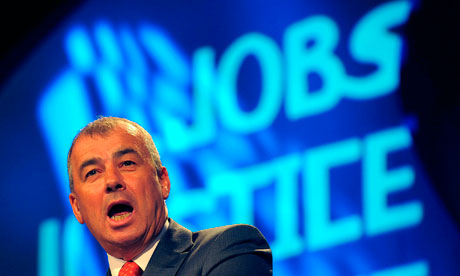
Mr Barber promised that the 30th November would bring "the biggest trade union mobilisation for a generation".

With the prospect of such widespread disruption, some may wonder why we have need of trade unions. The answer, in brief, is that a great many privileges and rights were fought, gained and now protected by their bargaining work. Gaining prominence in the Industrial Period, these unions have helped ensure fair wage, safe working conditions and benefits.


This latest sequence of actions is thus but a continuation of a dedicated group of committee members. Certain citizens may see the unions themselves as wasting money in providing a service that the individual should defend themselves.

Mrs Thatcher could not support such a notion further. Many of the rebellions and riots that cloud her era of power are stained with the taste of union blood.

Continuing to live up to this Tory pragmatic, Chancellor George Osborne branded the proposed movement "deeply irresponsible".


It is simple logic that there must be a reform and revolutionising of the pension schemes in place so as to fully support the mass increase in the over 60 populous. However, such a level of backlash is undoubtedly unprecedented given the need to overhaul the current system or risk jeopardising economic recovery in the long-term due to benefit commitments.

Osborne reasoned that "The offer on the table is for public sector pensions that are far better than most in the private sector and fairer to taxpayers." and stubbornly rebuked action as contradictory to the benefits of the country.

Interestingly, Ed Miliband, representing the Labour party, has made decisive comments against the action too. Trade Unions are occasionally referred to as ‘Labour Unions’ due to the high level of pragmatic and practical similarities. I have heard joke before that a Labour MP’s speech at a Union conference is almost like the best man speech of a wedding; this being the esteemed level of comradeship.

However, Mr Miliband has distanced himself from strike discussions whilst talks are still continuing, yet despite his best efforts, he has acceded into stating that he would prefer there not to be any strikes, citing a previous effort in June as “a mistake”.


Risky territory for the coalition government, Labour needs support from union officials to remain at full influence as the party can be quite reliant on cash from the union leaders. In addition, with some sympathetic Lib Dem MPs, it is divisive to the ruling party in Westminster.

Political repercussions could be just as severe as economic impact.

Winter blues then are sure to whistle disruption along for many British, with The GMB's Brian Strutton advocating: "not [just] a day out and a bit of a protest. We're talking about something that's long and hard and dirty as well, because this is going to require days of action running through the winter, through into next year. "

At least Maggie won’t be losing her four hours of sleep over the issue.