Saturday, 3 September 2011

The Fast Food Song.


Two students stand in their kitchen, chatting about the day’s events and putting the finishing touches to their evening meals. Tempting smells of culinary delight waft through the house and soon have other members of the student community that share the kitchen reaching for their phones or a cheeky chip from a friend’s plate.

The reason? Whilst this idyllic scene of student camaraderie is the joy of every parent who wants their child to grow up, the truth is that the student has automatically diverted to the ever reliable takeaway service.

Diets of noodles and pizzas are not the healthy variant. This much is obvious. But their convenience is undeniable.

However, recent research suggests that most people are getting much more from the food they purchase in a hurry than they bargain for. Filling up on sat fats, salts and various additives, it appears fast food has not become as conscious of its content as is often advertised.

Colours achieved in many of the vended chicken tikka masala and sweet and sour chicken meals are due to colouring. A total of 223 takeaways nationwide failed to adhere to expected standards and consequently there is a great worry that the extent to which food is of subsidiary expectations will never be known. It was also added that around 20% of meals promoting themselves as free from nuts actually still contained the potentially lethal ingredient.

At minimum, caution is recommended by the Food Standards Agency.

The agency has called for a voluntary ban on artificial colourings including sunset yellow (E110), allura red (E129), tartrazine (E102) and ponceau 4R (E124) because of their reported link to hyperactivity in some children. This is because there are only restrictions and not blanket bans on these products.

However, some takeaways were found to even flout the recommended maximum amounts for these additives. Without regulation, it is difficult to ensure standards are maintained.

Councillor Paul Bettison, chairman of the Local Government Regulation Board which carried out the study of takeaway meals, said that the high levels of fat, salt and sugar in them were "truly shocking and unnecessary". He continued by adding “There's no excuse for illegal amounts of colouring and as for secretly using a cheaper type of meat, that's just shamefully ripping off customers.”

Of course, money is a big issue for students, especially with the impending price hike. But group together to buy some produce and sit down to eat your meals. It saves money and you make better friends having dedicated time together.

No one is expected to be a culinary whizz. However, the consequences of not trying to put a meal together could be much worse than a failed attempt over the stove.

Without being an advertiser, or promoter:
http://www.youtube.com/show/takeawaymytakeaway?s=1

Thursday, 1 September 2011

I Need A Dollar.


Recession has hit many in the country hard and the gap between rich and poor continues to grow into a chasm that will only be closed after several decades of continued effort.


Whilst just 5 years ago, Britons were amongst the better off peoples in the developed world, having more wealth per capita than Americans, the turmoil in economic banking has hit hard. In order to grind the recession to a halt, there need be revolution of the way the monetary systems correspond with each other: how far countries should integrate, banks make deals, loans be offered etc.

The Independent Commission on Banking is due to deliver a full report and recommendations on how to proceed in these turbulent times come September. However, in its Interim release, there was call for a ‘ring-fencing’ of bank operations.

John Vickers, who is leading the commission and is also the former chief economist to the Bank of England, outlined the suggestion in April. It would involve separating the retail operations of banks from the investment quarters. In so doing, it would be hoped that the taxpayer is firstly never again responsible for the blunderings of the multinational corporates, and also ensure a more stable safe haven for money deposits, by interest rates and bank credibility not affecting all customers to the same extent.

However the Government is under no obligation to implement any recommendations from Vickers.

Although the Commission was set up by the current parliament last year, it seems that there is already a shrugging of its findings, with ministers being shy to accept the report. There is no rush to go ahead with splitting up the sectors.

Of course, economic stability is not quite as simple as it was at the beginning of last century. Whilst countries only had interdependence on a few others, the globalisation of markets has led to a wide and often unstable allegiance of various countries. Whether these are markets for imports or exports, goods or employment, there is now a consensus that any changes need be implemented on a global scale never before witnessed.

With the Eurozone failing and a ban on cold selling, there is a certain unease. Across the pond, America’s credit rating has been downgraded. The giants of world revenue are tumbling.

The head of the British Bankers' Association, Angela Knight, has said that there needs to be a focus on the recovery first and the taxpayer second. She said that regulatory change could undermine the recovery, whilst John Cridland, director general of the CBI, added that "Taking action at this moment - this moment of growth peril, which weakens the ability of banks in Britain to provide the finance that businesses need to grow - is just to me barking mad,"
 
The question then is how to tackle the crisis.

Naturally, this has been the forerunner of all major economists over the past three years, but this is all the more relevant because just months ago, forecasters were once more predicting growth that was never yielded. There is no stability or predictability in the market. This in turn makes it even weaker. The circle continues so that faith in markets plummet, stocks fall, value is wiped from companies.

In this way, it is logically to assume the real resolve would be to add back confidence. This involves the banks interlending. This would have to be monitored, but if there was a free flow of money, there would be less economic danger of funds being tied down.

This would open new markets and revenues and allow customers to shop more freely, invest more freely, and trust more freely.

However, regulation is difficult due to the uncharacteristic nature of the markets. Any action could send it toppling or cause a bounce back and these extremities are believed too risky. Slow progression is favoured.

Whilst this may be advisable for now, regulation revolution is required if there is to be consumer confidence in money matters once more. The extent of lost revenue and wealth is overwhelming: there need be change to the structures of money lending. Banks can no longer be the only regulators.

Watch this video for an explanation regarding how the economic crisis could spread. Applicable to many countries in the Eurozone too:

Wednesday, 31 August 2011

Liberation in Libya?


After a climatic six months, the final usurping of Colonel Gaddafi is hailed as the liberation of Libya. 

However, such a statement need be reserved for a time when the country has resumed a state of normality and stability. Whilst the shift of control is something to most certainly be celebrated, the country remains terribly fragile, with continued reports of fighting, gunfire and protests.

With a stint in charge that now spans six decades, Col Gaddafi has seen his leadership through a great many tumultuous situations. Resurgent and dwindling support extremities often characterised his period as head of state. Continued change in political support has ensured that there has never been adequate reflection of public sentiment over this period.

Now, with the rebel forces taking over administration of the African territory that has dominated news in 2011, there is a fear that this pent up frustration will out.

Key concerns include supply chains for medicines and foodstocks, power facilities, communications and, inevitably, law and order.

For example, with hotspots of violence being persistent across the country, there are more walking wounded than is normally anticipated for Libya. Add to this that the fighting targets and damages public places like hospitals and consequently there is little support. Moreover, with increasing power problems, hospitals would be unable to sustain proper standards of support.
A damaged hospital in Zawiyah.

This is but one example of how this conglomerate of issues corresponds to a growing concern for the area.
As Geoff Loane, the head of mission for the International Committee of the Red Cross (ICRC) pointed out: "The absolute priority is that security is provided, as required for a big urban sprawl. As we saw in England, it's very easy to destabilise urban environments."

When looking over Gaddafi’s legacy, it need be remembered that for many of the population, he has been their only leader. Now there is free reign for fresh ideas and control.
Scenes of celebration - Too early?

Almost instantly, Libyan interim leaders have rejected UN military aid to keep control. At first glance, this appears the founding steps toward a new era of forced control. Where there is army control, it is often synonymous that there is no free government. That this should be a considered option is to cause great fear for many who have strived for freedom.

Yet, the force would be independently led. Elsewhere in the African domain, recent coups have seen armed forces successful manage to maintain peace in Egypt as it continues through its own revolution.

Moreover, when in desperate need for stability, a military force is indeed a ‘strong’ option. There has been no clear cut succession regime, particularly considering the fact that Gaddafi has not publically surrendered. In fact at time of writing, representatives for the dictator have rejected the proposed ultimatum to surrender, saying: “No dignified honourable nation would accept an ultimatum from armed gangs.” 

However, since this was never declared a war, civil or otherwise, there is a great desire to avoid such a position; and perhaps being seen to accept such a form of aid would be understood as many living within Libya as an admission of combat. Yet with restricted supplies and a resilient (if not absent) leadership, it is predicted that the problems could yet escalate further. 

Therefore, with no new figurehead or group claiming control, there is a vacuum that could potentially be filled by extremists or those inadequate to lead. With power remaining vulnerable across the state, there is chance for history to repeat itself.
Checkpoints are controlled by rebels, without a central law enforcement.

It is hoped that the release of 1.86 billion dinars in aid will ease the transition and form bridges between Europe and the African nation. But with port authorities and oil firms still blocked and various European countries remaining dubious until there is proof of development, it could be some time before Libya’s problems are resolved.

Hopefully, they will not span another 42 years. But who knows where absolution will come from?...


Wednesday, 17 August 2011

To Punish or Not to Punish.


Certain incredulity is surely abound amongst the British population tonight as MPs argue back and forth over the level of punishment suitable for the rioters that ruled several important cities across the country last week.

Coming to terms with the extent of last week’s devastating loots, the Prime Minister, David Cameron, last week publically pledged that all those found to have been involved in the illicit actions would be met with the full force of the law: a sentiment that was supported by the vast majority of the nation. Mr Cameron added “If these people are old enough to commit the crime, they are old enough to face the punishment.”

However, as it emerged that some of the participants were as young as eight years old, there begs the question of the age of criminal responsibility. Moreover, this issue is one clearly within the public spotlight and mind frame. Unlike the daily sessions in court, specific interest has caused a commotion and tense atmosphere under which jurors are expected to pass harsher sentences than normal.

Of course, these are no normal conditions. Law should be considered as a measurable tool for each individual and not haphazardly applied in blanket fashion across all those who are not law abiding citizens.

Yet it is somewhat disparaging and deeply concerning when people are faced with this comparison: 18 year old, David Atto, pleaded guilty to the theft of two Burberry T-shirts. With no previous convictions against his name and an honest plea, he was sentenced to a day in custody. Meanwhile, Nicolas Robinson, 23, of Borough, south-east London, was jailed for six months for burglary. Of course, whilst the nature of the offense is similar to that above, Robinson took a £3.50 bottle of water from a Lidl Supermarket. The difference is astounding to say the least.

Some judges cite the difference of the level of crime as meriting the change in sentence strength. The natural response is an onslaught of appeals to what many feel constitute a miscarriage of justice. 

However, if the perpetrators were so moved to action in a frenzy trusting that they would only receive trivial punishment, then the system need not cave on the level of severity introduced thus far.

Now that more than 1,000 people have been sentenced in association with the disturbances, the murmurs of discontent on both sides are spreading. As changeable and extreme as the punishments first appear, ex-Lib Dem leader Sir Menzies Campbell has urged MPs not to pass comment. Any attempt by MPs to influence judges' decisions was "not consistent with the rule of law", he told the BBC. In a radio interview, he elaborated by explaining, “What I don't think is right is that politicians should have a league table in which they approve of some sentences and disapprove of others. It's none of our business.”

Unprecedented opinions however are sure to spill over and whilst Sir Campbell’s comments make sense so as not undermine any law system, these, the most powerful men and women in the country, are looked toward first and foremost from a populous so dumbfounded.

Technological twists only further tangle the trials and thought on relevant sentence. With many now being brought to court for Facebook and Twitter comments as inciting violence, there is a difficulty with how to justify any extended action if the person was not directly involved or foolishly made a passing jibe. In almost a sci-fi fashion, we could be advocating courts to follow through on pre-crime solutions. 

Level of justice and level of crime. Scales that constantly need be measured to ensure a smoothly running country have here seemed to see-saw back and forth. But as a public we must remember, we are no more qualified to say what is suitable punishment than the MPs. Politicians make law; police and courts enforce and implement law.

Saturday, 13 August 2011

Division or Unity? Germany's Unique Position.


Whilst this past week has seen many social divisions arise within our own country, their importance and depth is relatively dwarfed by those of some of our European counterparts on the mainland. Rioting and violence nationwide has triggered a plethora of responses in an attempt to comprehend any reasons which could support such actions. Although there are many lessons to be learnt of the divisions plaguing English society, the fragile illusion of unity that undermines other nations is all too striking. 

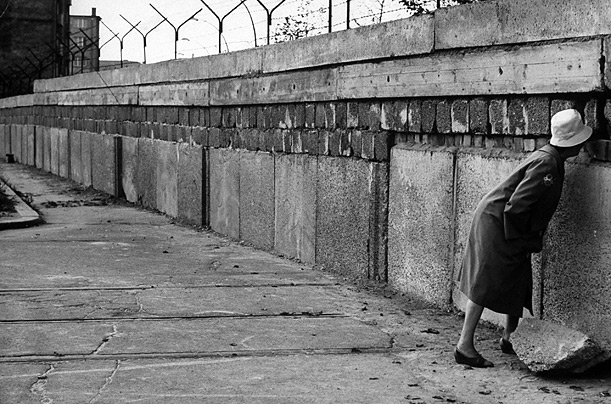
Today, Germany, a country of total unity in the modern world for only some brief 20 years, commemorates – or rather commiserates – the construction of the Berlin Wall half a century ago; a move marking one of the most consistently hostile environments of propaganda and restriction upheld in a supposedly sophisticated and developed 21st century world.

Between 1961 and 1989, the Berlin Wall stood to separate the West from the East of Europe: to separate ideologies; to separate economies; to separate neighbours and countrymen amidst a political climate of rivalry.
Capitalism and Communism countered each other throughout the period that became known as the Cold War, but the harsher realities of this were for those behind what has become referred to as the ‘Iron Curtain’.

East Germany in particular suffered more than a number of other countries in the region due to the sudden and definite manner in which the land was ripped apart without thought for consequence of lifestyle, recovery from the war or global wellbeing. The wall became an icon of what was to many an inexplicable act of social warfare. 

However, despite the passing of more than two decades since the fall of the wall, Europe is still haunted by its spectre. Whilst the reintegration and orientation of East and West has seemingly gone forward smoothly, it is much more a small scale reflection of the somewhat slower integration of Eastern and Western domains in a globalised world.

For many, the wall was a restriction similar to that suffered by livestock. A violation of freedom not seen amongst humans for centuries.

Reaching into the twenty first century then, such primitive restriction now holds the key to psychological and economical divisions. Questions as to abandonment, sacrifice and how far a country cans be expected to support its citizens: particularly following one of the most turbulent periods in continental history. The scale of the issue effects life in many different ways.

First of all, there are those for whom life behind the curtain ensured that life without it is ironically too difficult. There a large minorities in the East that do not associate with those Germans from the West of their own country. “I cannot name a single West German with whom I socialise now - really, I can't” admitted Brigitta Heinrich to a Russian news agency. For many, the repeated ideological mentality that was enforced in daily life means that the ideas of generations raised either side of the wall are simply not compatible and so relations are strained.

Of course, there are those who suffered indirectly. If one was believed to be related to an escapee, or attempted escapee, then one may be subject to all types of humiliation: eviction, unemployment, rejection from social groups etc. Life had to be dedicated to one idea in the East.

For those who died in their attempts at a life of freedom, a glorified and much fantasied ideal of the West was the prime reason for their final journey. Debates rage as to the total numbers of deaths caused by gunmen who kept constant sentry over this, the most ridiculous of constructions. At least 136 are known to have been killed but victims' groups say the true number is more than 700.The first victim was thought to be Guenter Litfin on 24 August 1961 and the last Chris Gueffroy on 6 February 1989.

To this day, there are continued economic divisions, lifestyle divisions and belief divisions. A continent divided. A country in two.

At ceremonies across the country today, many paid their respects to what has become a defining moment in the recent history of the reforging of a nation. Almost too prophetically, leader claims that Germany was under attack from surrounding countries in Europe turned to be truth, as its assets were split and its citizens left with a grand sense of moral shame.

Mayor Wowereit said the capital was remembering the "saddest day in its recent history". At a ceremony at a former crossing-point, President Wulff said the wall had been "an expression of fear" of those who created it.

Whether an image of fear or power, the wall is a testament to the psychological fancies of leaders worldwide.