Indian Government Spending and Aid contribution figures have been blown sky high.
The launch of an Indian Mars
Mission is a giant leap for mankind. It marks another step in a global space
age, once the reserve of the US and Soviet Russia.
Not only does it stand as a
statement of India intent, but it demonstrates that here is a country slowly
building its way out of great economic deprivation.
However, it is slowly. Public
perception of India’s Mars Mission has been largely confused, with many
claiming it to be a demonstration of wealth from the country. The evidence
shows that the country is taking off quite literally and so aid contributions
are no longer needed, many have suggested.
In reality this is a gross
miscalculation that confuses the difference between growth and wealth in the
Indian subcontinent.
Since the 1990s, the area has experienced
its greatest period of growth in the country’s history, with many companies
tapping into the wealth of resources that India can offer. Whilst it has helped
to bring many millions out of poverty, there has not been a significant
reduction in the percentage of people who live below the line. Around 40% of
children are malnourished, and adults fare little better. The country is still
renowned for its slums, with more than 500 million Indians living without
electricity.
The growth of skilled labourers,
scientists, doctors and other professionals is redefining the landscape of
India. The space missions are far from a new project: they date back to the
70s. In fact, China’s space missions are more recent than India’s. Therefore,
the willingness to invest in these enterprises shows a keen dedication from the
Indian government not to be backfooted once again. Here is a nation that was
forced into submission by British and French forces, which made the lands part
of their empire and irrevocably damaged development there.
Never again says the space
mission.
This is not a declaration that
India does not need aid. India still remains home to the world’s largest poor.
After all, aid is about poor people
and not poor countries.
In Uganda, for example, aid
packages from the UK are now not being sent to the government, but instead to
agencies that will ensure the people will benefit from the money sent to the
country. A similar review of expenditure in India should be brought forward,
especially since there have been previous examples of India declaring that they
do not need British aid.
Whilst this is a gross
underestimation on the part of a country still in need of sufficient sanitation
measures for a vast percentage of its population, the space missions do mark a
step in the right direction.
Withdrawing from India at this
stage would not be right; it would be a fiscal rerun of independence. The
support from Britain ensures that India can now be seen not as an economically undeveloped
country, but somewhere for companies to invest. Indeed, Pepsi Cola have
recently announced a larger investment into the country’s infrastructure.
Aid merely needs readjustment:
instead of packages, India now needs business legitimacy amidst its Asian
rivals. The space mission is merely a manifestation of this Indian capacity.
Providing these economic opportunities will ensure a strengthened
British-Indian relationship, profits for both countries, and slowly reduce
Indian dependence on aid.
India’s space revolution ushers in a new era of economic strength that needs commercial and corporate support if it is to transform and reform India as the international player that the country craves to be, surrounded by Arabian prominence and China’s technical drive. Acknowledging the injustice of colonial expansion, and supporting the Commonwealth evolution from a business table will launch the country to the stratosphere without much more help.
Tensions continue to mount in
Syria following further bombings in Homs, and around the country, as voting on
a referendum was held yesterday.
The city of Homs remains under
fire and troops are reported to be firing artillery, mortars and anti-aircraft
weapons at several towns in the Idlib circumference.
Syria is the latest in a string
of Arab countries to be tipped into turmoil and the threat of revolution.
Whilst the events have not yet been classified as either a civil war or as an
uprising, there are threads of similarity to the revolts seen in Libya and
Egypt in 2011.
The protests pose the greatest
threat to four decades of Assad family rule in the country and a strong
military force since March 2011 is starting to fail. While the eyes of the
world were on other pressing revolutions in the area over the course of 2011,
action was sparked when citizens wrote “The people want the downfall of the
regime” on several buildings in the city of Deraa. When protesters were set
upon with army force, they accidentally sparked a wave of national movements.
As a great many Westerners remain
ignorant of the initial causes and reasons behind the revolutionary action due
to more violent unrest elsewhere, here is a summary of some key concerns for
Syrian citizens:
·
Fall of the regime: no step down has been forthcoming from Assad.
End to the 48-year-old emergency law: although revoked, Syrian forces still open fire
at will.
Immediate end to extrajudicial killings and torture: the president has revoked claims of crimes against humanity.
Release of political prisoners and detained protesters
Transition to a democratic, free and pluralistic society
Yesterday saw a mobilisation towards the final
objective: a referendum was held across Syria for a new constitution. Of
course, whilst the voting was opened and ran according to predetermined
regulation, there is concern not only that there will be tampering with
results, but that as many significant cities with revolutionary zeal were under
fire, the results will be skewed with too few voting in favour of change,
either being scared or unable to leave their homes.
The new constitution calls for a
multi-party parliamentary election within three months.
Even President Assad himself was seen
voting, the leader claiming that he sees the new constitution as the key
element in a reform process he says will make Syria a beacon of democracy in
the region. Perhaps the president believes that if he is able to curb and
appease the uprisings, he will be able to remain in power.
However, the process has been deemed a
sham by some countries, who claimed that even the old regime was not too far
off Western politics, but leaders chose to ignore its constitution.
Meanwhile, China dismissed US criticism
of its Syria policy, branding the claims that continued trade with Syria was
“despicable” as laughable; many officials stated that the US had no right to
speak for the Arab world after the atrocities seen in the invasion of Iraq.
However, Europe continues to impose
sanctions on the country, including:
a freeze on the European-held assets of the Syrian central bank
travel bans on seven close associates of President Bashar al-Assad
a ban on cargo flights from Syria into the EU
restrictions on the trade in gold and precious metals.
Although French President Nicholas Sarkozy believed
that things in the area were beginning to move, and that there was an imminent
solution in the offing, the situation remains extremely tense and it may only
be with the pressure of sanctions that the country becomes pliable to the whims
and demands of the West. Should China continue to support the Arab world
however, the violence and unrest could gather a sudden momentum.
With hundreds of citizens killed in the new year
alone, it would seem that there is still an equal resilience on both sides of
the Syrian crisis, which only poses further confrontation with the Arab world
as an example of the latest battle for a new independence.
1916: In the middle of World War
One, Ireland stages a bid for independence in Dublin, threatening the British
chances of success at a crucial moment in the war effort.
2012: In the middle of the worst
recession since the Wall Street Crash, Scotland stages a democratic bid for
independence “in Edinburgh, in London, or anywhere the Prime Minister pleases”,
with many deeming the act detrimental to British growth at a crucial moment of
European downgrading.
Certainly, the debate waging
around the possibility of independence versus unity has seen battle lines
drawn, but these may be premature concerns.
Previous breakups of the United
Kingdom in Ireland provide a primary cause for concern. However, the eventual independence
granted to Ireland was more an appeasement following a costly war, with
transition handled distastefully by both parties. Looking back over the course
and administration of the change of power, there are easily identifiable
mistakes that could (and should) be avoided in the case of Scottish
independence.
Continued violence and hostility
is the true legacy of Irish independence and that was a threat suffered
particularly till the turn of the century, but a decade ago. Scottish
independence, on the other hand, would be entered into through democratic
debate rather than the forceful mode of conduct that kickstarted and marked the
Irish movement. England, not as prominent on a world scene, would be more
amenable to these discussions than its own rash nature almost 100 years ago,
when maintaining status was a priority.
Besides, a peaceful resolution
would be encouraged while resources are stretched so thin across the United
Kingdom due to cuts.
However, Scotland would surely
earn the lion’s share of these resources from a split. Economically vibrant at
the moment, Scotland has, as expected, the second largest GVA per capita in the
United Kingdom, after England. Yet, many do not appreciate, or are completely
unaware of, the fact that revenue from the North Sea oil rigs are not included
in these figures, as the profit is currently ‘distributed’ around the UK
instantly. With independence, 91% of the oil area lies within the Scottish
borders. The sudden wealth that would be available to the northern territory as
a whole would transform many areas of public spending and investment: leaving
Scotland with little deficit.
In fact, it is already recognised
that Scotland is the largest producer of petroleum within the EU, and that
there is potential for other offshore oil-sites.
Additionally, Scotland is the
central zeitgeist for whiskey lovers worldwide. Exports in specialisms such as
whiskey, shortbreads, fudges and fishing produce earn the Scottish country a
reputation for delicacies renowned the world over. Add the prominence in
manufacturing and construction (Glasgow for example houses the largest shipping
construction area within the UK), and one can see the advantages to a booming
Scottish economy.
Already a relatively rich nation,
the boost proffered from continued exports would ensure gained capital and
circulation of the pound. In 2007 alone, Scotland’s top 10 export destinations
alone earned the country in excess of £18,825 million. Imagine the growth in
this figure with Scottish independence, backed peacefully by England.
In turn, this could help Scotland
to tackle its slums and poverty problems. Despite the economic benefits of the
oil, there is still marked difference between lifestyles of many Scots and
their counterparts south of the border. An average male in Glasgow for example
only has a life expectancy of 69. Scottish public services see themselves as
inhabiting a different social area than England and Wales, with different key
issues of poverty, drugs, and unemployment to tackle.
However, even with the
separation, use of the GBP will insure continued intrinsic links with the
remaining UK factions. Extra trade on the pound from Scotland will ensure
continued circulation that benefits England and Wales itself in the long run.
A poll by YouGov last May showed marginal support for the move, but an overwhelming rejection from Scotland itself.
Perhaps the break-away of
Scotland would also encourage a deeper look at the British image: a modern
twenty-first century conglomerate of cultures hinged on London. The investment
seen across Scotland should be mimicked across larger areas of the UK. HS2
makes some steps in that direction, but relatively few and relatively slowly.
England is not capitalising upon its current market opportunities. Expanse of
infrastructure would allow greater migration of peoples across the country for
jobs. Focussing our main sources of income on development would allow a certain
independence in a time of Eurozone uncertainty, creating a more stable market
area. A galvanised population to the
North could teach English people a thing or two about national pride for sure.
Scuppering Salmond’s hopes for
Scotland however are the Welsh and Irish members of Parliament, claiming that
Scottish dominion in its own right would leave the two areas outvoiced within
Westminster.
Nonetheless, considering moves
towards Welsh parliaments, it would appear rather foolhardy to prevent progress
for the sake of tradition. Not only does the move allow England a greater
democratic voice, but it is not in the apocalyptic fashion that the Welsh and
Irish describe: rather radicalisation on both sides of the border due to the
split would see new ideas emerge as to how the country should be run and here
lies the prospect of wide social and cultural change (the thing the Welsh and
Irish appear to advocate amidst a Tory government).
With no date currently set for
the vote (despite furious debate over timing this past week), we shall have to
watch the development and resolution of lingering issues, such as currency,
military, and Nuclear warheads over the coming months.
Shaking of the shackles of union
is never an easy transition, but for the cultural, economic and social benefits
that Scotland could wager, perhaps the UK should be more amenable to the shouts
of “FREEDOM”.
Never one to point out the obvious at rather a late stage in
proceedings, Prime Minister David Cameron took to the podium at the CBI
conference to announce that the current economic climate and crisis in the
Eurozone were having a “chilling effect” on the UK economy.
Now, this fact was probably widely re-acknowledged around
about six months ago; the world having watched continued Greek financial woes
and the growth of Italian instability. Add to the melting pot the downgrading
of American credit and the shrinking of forecasts for growth and most people
were under no illusions to the state of the economy.
However, we must certainly thank the Prime Minister for
pointing out these obvious facts that are supposed to be being addressed firmly
by his government: alas, apparently to no avail.
He blamed the current lack of growth on the continuous
string of bad news about economy matters, but did not announce any ground
breaking scheme himself. Rather, this task is dutifully left to burden George
Osborne’s shoulders next week.
Whilst the PM is under a great deal of pressure to reverse
the position of Britain amidst these financial troubles, surely highlighting
the problems and not proffering any solution himself is but counter-productive.
Although some may say truth is the best tactic, these facts were already
wide-held public views: their reaffirmation by Cameron only serves to further
down-hearten British workers, contractors and entrepreneurs and shake the
foundations of faith in both commerce and the government.
Mr Cameron also told the conference: "Everyone agrees
now that in the past Britain's economy had become lopsided: too dependent on
debt, on consumption, on financial services.” Unfortunately, the continued
upholding of a policy of cuts is doing nothing to reverse the trend, but rather
stagnate the economy.
This concept that it takes money to make money and debt must
preceed profit only just now appears to be clicking as the PM is set to detail
housing schemes, but the projects are somewhat received only to mild
appreciation: the economy cannot take much benefit from such a slow burning enterprise.
Perhaps, rather than continuing to be a staunch coat and continuing to plug policies that are not working, Cameron and his faithful Clegg should consider redressing their approach and apologising. It could be the making of a great economic boom in the long run. New tactics worked for Roosevelt. Was no one making notes? Did no one pay attention in history class?! Would his approach hurt the support of the Tory party too much and appear like socialism? Probably, and that why politics no longer involves the public right; it’s just a game of opposition policies…
A spectre is haunting the world.
A spectre that hangs on a global scale.
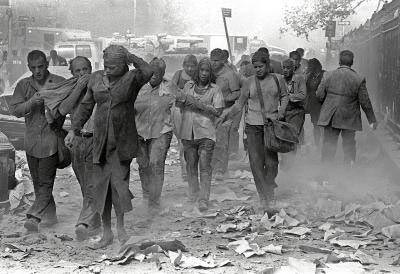
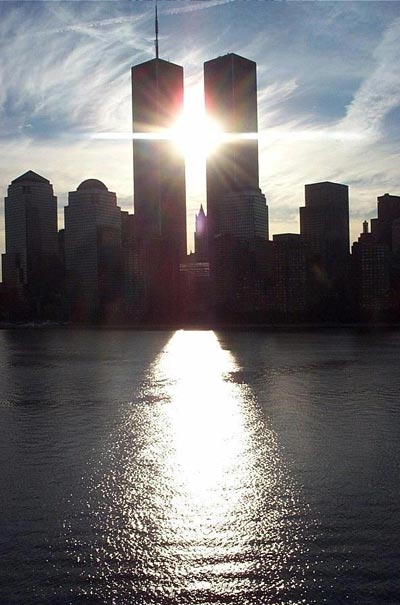
Just one decade ago, as the
shadow of one structure fell from the Manhattan skyline, another erect itself
in its place. Greyer than its predecessor, this new structure threw a dark hue
over New York, America and the world.
Over the course of an
intermittent ten years, the word terrorism has come to take a prevalent place
in the life of many in the Western World. Those who are now coping with the
legacy of 9/11, the so called 9/11 generation, live in a domain where attack
comes in any form at any time, in order to strike fear into the civilised
fronts of Europe, America and Asia.
Essentially, we live amidst the
largest battle of ideologies since the Cold War.
Now, as in the period that saw a
stalemate of superpowers, many people wonder whether today will be one that
sees their daily life thrown into chaos. When once a battle was something that
happened away from public view, not only is it now an inherent part of the
media and our daily life, but it could impact personally. Whether friend,
family member or threat to self, with attacks on trains in Spain, airports in
Glasgow and tube systems in London, the shocking increase in the frequency, ingenuity
and scale by which these terror threats manifest themselves means that peace is
on hold.
Segregation is the first and most
evident effect on society. Many Muslims in America recount the weeks and months
and even years following the devastating attacks on the country that
essentially left them without identity. Belonging to a community that took
credit for the death of almost 3,000 people, these American citizens became
shunned.
Some claim that their livelihoods
were threatened, others lost jobs and racial insensitivity ensued with the rise
of misunderstanding and hatred.
One day has come to personify an
entire religion and cross section of society, without room for their defence.
Recently in France, there has
been a ban on the burka in public places and those with professional careers.
The French government advocates that this move is to enable people of all
faiths to come closer, eliminating a potentially boundary between social
groups. Others remain indignant and see it as a source of racism. Elsewhere, as
the clean-up from riot torn Britain continues, there are a select number who
laid blame on social divisions between ethnic minorities. These fragments that
have broken away from daily society trace routes to problems established on
that September morning in 2001.
Although subsequent wars in Iraq
and Afghanistan have played out on a different continent, the psychological
effects reach further. For those who know any serving member of the army, each
day is a blessing, as no news is good news. Establishing Middle East war zones
sets up a dichotomy by which there is a comfort that there is justice for the
innocent people that lost their lives, yet the dangers of antagonism,
overthrowing illusive figures and daily bombings adds to death tolls.
More importantly on home fronts,
with Wootton Bassett ending its tour of duty as representative for those
fallen, an entire town is bearing responsibility for public grief one last
time. Across the Atlantic, one prison has become so intertwined with the myth
of Army brutality in the name of public safety that there is a passive
acceptance to its morals.
These are the truths of life post
9/11. Initial reactions to a plane hitting the North Tower were the cries of a
tragic accident. Barely 15 minutes later, all such nativity and good nature was
lost not only from those who lived in New York, but gradually across America
and later Europe.
News channels now do not hesitate
to question whether some unidentified disruption is the cause of a terrorist
attack. Until September 2001, there would have largely been questions that came
before this: what was known of the problem, or what were the authorities doing,
or whether there would be a state of normality resumed soon?
Now: Is it a terrorist attack?
Who claimed responsibility? What could have been done?
For all the expectations of
attacks that are now a constant worry of the average person, still each extravagant
declaration of a problem with a nation comes as a surprise. What did we learn
from 9/11? Extremists still managed to successfully detonate a bomb in Spain.
English police forces had tips of an upcoming attack on Underground facilities
and yet services remained unprepared in the event.
Norway, the latest victim,
disbands the belief that only countries of certain proficiency and status on a
global front are targets. Although only the actions of one man, the ripples of
this double attack are testament as to how far social divisions are at a play
on a global scale.
The worry is that such divisions
are irreconcilable and beliefs incompatible.
From the ashes of ground zero,
the ashes of dead businessmen and women, should instead rise a beacon of hope
and a dedication, a pledge, that never again should deaths of innocent people
be the bi-products of hatred.
However, this can never be the
case if there remains a volatile system that constantly refers to broken social
groups and minorities as outsiders.
Following 9/11, the role of the
media should be to focus on stories and occasions wherein there has been a
coming together, a conglomeration, of different segments of society. We all
bear a responsibility to accept, understand and recognise the rights of
individuals and groups and their ways of life.
Instead, in film, in press and on
radio, the reverberated sound is one of hatred and denial. Hollywood has cashed
in on a priceless tragedy. Blockbuster releases, such as ‘World Trade Centre’
and ‘Flight 93’,
do not aid the public memory of the attacks on America. Rather they are
demeaning to American citizens, whose lives were cut short, doing their jobs.
In the press, we seek to lay blame solely on those in the East and quickly
forget the role the West has played in previous decades; supplying arms and
choosing sides is but all forgotten amongst the chaos.
Somewhat with bad taste, the
humorous ‘4 Lions’ mockuments the plans of 4 would be terrorists. Despite the
comedy film, it is this ironic take on something so serious that has a relaxed
stance taken by public officials. If we are able to laugh in the face of
adverse terror, why should we prevent it?
Media outlets are the voice of
the 9/11 generation. Their function should be to allow a communication between
those victims of attacks, to ease their pains and to bring society together.
A spectre of terror haunts the
modern world. Whilst it is a unifying spirit, it is simultaneously a spirit of
terrible trepidation and divisive deeds. Since its inception, this ghost of
fear has served to make one group a scapegoat and one group a leader of peace.
It lingers to separate world populous into those who are would be victims of
terror and those who incite terror.
Instability abound, the Western
world finds itself precariously balanced: for with power comes a duty of care.
If it is to lead nations from the threat of external invasion, it firsts need
look within and proactively protect its citizens.
9/11 serves as an unheeded
warning. Most remain unprepared for an attack and many remain ignorant of the
country and customs of those being invaded. The media breaches its own duty in
not being a reliable source of information.
No longer can terrorism be swept under the rug: it is public domain.
Currently, the Manhattan skyline
is dominated by the spectre that stands at 1,368 ft. Soon, it will be joined at
that height by World Trade Centre 1, or Freedom Tower. With Freedom comes the
hope that the current ideology of terror will be washed by the waters of the
fountain that circle the Twin Tower base: otherwise, there will progress a
stalemate of fear, a waiting game of attack and consequence.
After a climatic six months, the final usurping of Colonel Gaddafi is hailed as the liberation of Libya.
However, such a statement need be reserved for a time when the country has resumed a state of normality and stability. Whilst the shift of control is something to most certainly be celebrated, the country remains terribly fragile, with continued reports of fighting, gunfire and protests.
With a stint in charge that now spans six decades, Col Gaddafi has seen his leadership through a great many tumultuous situations. Resurgent and dwindling support extremities often characterised his period as head of state. Continued change in political support has ensured that there has never been adequate reflection of public sentiment over this period.
Now, with the rebel forces taking over administration of the African territory that has dominated news in 2011, there is a fear that this pent up frustration will out.
Key concerns include supply chains for medicines and foodstocks, power facilities, communications and, inevitably, law and order.
For example, with hotspots of violence being persistent across the country, there are more walking wounded than is normally anticipated for Libya. Add to this that the fighting targets and damages public places like hospitals and consequently there is little support. Moreover, with increasing power problems, hospitals would be unable to sustain proper standards of support.
A damaged hospital in Zawiyah.
This is but one example of how this conglomerate of issues corresponds to a growing concern for the area.
As Geoff Loane, the head of mission for the International Committee of the Red Cross (ICRC) pointed out: "The absolute priority is that security is provided, as required for a big urban sprawl. As we saw in England, it's very easy to destabilise urban environments."
When looking over Gaddafi’s legacy, it need be remembered that for many of the population, he has been their only leader. Now there is free reign for fresh ideas and control.
Scenes of celebration - Too early?
Almost instantly, Libyan interim leaders have rejected UN military aid to keep control. At first glance, this appears the founding steps toward a new era of forced control. Where there is army control, it is often synonymous that there is no free government. That this should be a considered option is to cause great fear for many who have strived for freedom.
Yet, the force would be independently led. Elsewhere in the African domain, recent coups have seen armed forces successful manage to maintain peace in Egypt as it continues through its own revolution.
Moreover, when in desperate need for stability, a military force is indeed a ‘strong’ option. There has been no clear cut succession regime, particularly considering the fact that Gaddafi has not publically surrendered. In fact at time of writing, representatives for the dictator have rejected the proposed ultimatum to surrender, saying: “No dignified honourable nation would accept an ultimatum from armed gangs.”
However, since this was never declared a war, civil or otherwise, there is a great desire to avoid such a position; and perhaps being seen to accept such a form of aid would be understood as many living within Libya as an admission of combat. Yet with restricted supplies and a resilient (if not absent) leadership, it is predicted that the problems could yet escalate further.
Therefore, with no new figurehead or group claiming control, there is a vacuum that could potentially be filled by extremists or those inadequate to lead. With power remaining vulnerable across the state, there is chance for history to repeat itself.
Checkpoints are controlled by rebels, without a central law enforcement.
It is hoped that the release of 1.86 billion dinars in aid will ease the transition and form bridges between Europe and the African nation. But with port authorities and oil firms still blocked and various European countries remaining dubious until there is proof of development, it could be some time before Libya’s problems are resolved.
Hopefully, they will not span another 42 years. But who knows where absolution will come from?...