Thursday, 15 September 2011

The Largest Union Movement In A Generation.


With a certain self-rapture, Margaret Thatcher probably regards the latest developments in the news with a certain feel of justification.

Yesterday saw the formal announcement of circulating rumours: that a large number of unions are proposing planned strikes over the coming winter months, all calculated so as to hit the average person, and more importantly the government, with the full force of worker strength.

Four of the largest unions that operate across the UK have already commenced with their balloting. In order to fully plan the events and gage the level of support, each of Unison, Unite, GMB and the Fire Brigades’ Union are starting to draft plans and provide further information so as to ensure a co-ordinated strike action. Adding to the severity of this issue, a further ten unions may consider joining the action according to reports from TUC boss, Mr Brendan Barber.


Such foresight in synchronisation allows a monopolising of major industries and response units: in turn paralysing Britain.

Amongst those likely to strike, disruption comes from nurses, teachers, fire crew services, as well as a great many other skilled professions. Crippling Britain in this way affects all branches of life: ensuring need for extra vigilance in case of emergency, childcare worries and impact on wages earned for the period.

Powder-keg to the sudden outcry is talks regarding changes to pension schemes. Government proposals wish to introduce a revamp to the current system from next April so as to reflect on the growth and sustainability of an elderly generation. With a unanimous vote against the action from TUC, plans to engage a fight back were quickly moved to the forefront so as to have the public voice manifest itself for the government.
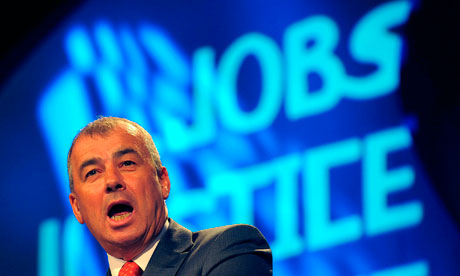

Mr Barber promised that the 30th November would bring "the biggest trade union mobilisation for a generation".

With the prospect of such widespread disruption, some may wonder why we have need of trade unions. The answer, in brief, is that a great many privileges and rights were fought, gained and now protected by their bargaining work. Gaining prominence in the Industrial Period, these unions have helped ensure fair wage, safe working conditions and benefits.


This latest sequence of actions is thus but a continuation of a dedicated group of committee members. Certain citizens may see the unions themselves as wasting money in providing a service that the individual should defend themselves.

Mrs Thatcher could not support such a notion further. Many of the rebellions and riots that cloud her era of power are stained with the taste of union blood.

Continuing to live up to this Tory pragmatic, Chancellor George Osborne branded the proposed movement "deeply irresponsible".


It is simple logic that there must be a reform and revolutionising of the pension schemes in place so as to fully support the mass increase in the over 60 populous. However, such a level of backlash is undoubtedly unprecedented given the need to overhaul the current system or risk jeopardising economic recovery in the long-term due to benefit commitments.

Osborne reasoned that "The offer on the table is for public sector pensions that are far better than most in the private sector and fairer to taxpayers." and stubbornly rebuked action as contradictory to the benefits of the country.

Interestingly, Ed Miliband, representing the Labour party, has made decisive comments against the action too. Trade Unions are occasionally referred to as ‘Labour Unions’ due to the high level of pragmatic and practical similarities. I have heard joke before that a Labour MP’s speech at a Union conference is almost like the best man speech of a wedding; this being the esteemed level of comradeship.

However, Mr Miliband has distanced himself from strike discussions whilst talks are still continuing, yet despite his best efforts, he has acceded into stating that he would prefer there not to be any strikes, citing a previous effort in June as “a mistake”.


Risky territory for the coalition government, Labour needs support from union officials to remain at full influence as the party can be quite reliant on cash from the union leaders. In addition, with some sympathetic Lib Dem MPs, it is divisive to the ruling party in Westminster.

Political repercussions could be just as severe as economic impact.

Winter blues then are sure to whistle disruption along for many British, with The GMB's Brian Strutton advocating: "not [just] a day out and a bit of a protest. We're talking about something that's long and hard and dirty as well, because this is going to require days of action running through the winter, through into next year. "

At least Maggie won’t be losing her four hours of sleep over the issue.

Tuesday, 13 September 2011

Kids With Beatles Wigs: Why The Kooks New Album Deserves More Praise and Less Mockery.


When indie rockers The Kooks burst onto the scene with the angsty and infectious ‘Naïve’ back in 2006, the band received critical acclaim, with the release going on to sell millions. Whilst the second offering from the band a couple of years later shot to the number one spot, this was later attributed to the reputation and premise of the first lash of material. In an attempt to repeat the formula, Konk was soon perceived as a dry and uninspired copy of its predecessor: the rockier songs had less kick, the sing-alongs had less cheer.

With great disappointment then, I read early reviews of Junk Of The Heart, that indicated the album was to be, at best, average.

Having hidden themselves away in some obscure location for several months, this album was to be a return to form for a group who has now suffered line-up changes and severe delays to production.  Critics however gear negatively towards the offering claiming that “[The album] is a series of half-formed, indifferently performed tracks” [Andy Gill, Independent], or mock the group as “boys next door who've got hold of a guitar and some Beatles wigs” [Caroline Sullivan, Guardian].

After listening, we can all breathe a sigh of relief: the donned Beatles wigs, per se, are rather of the experimental type, and those who regard the album in such an unfavourable light have obviously missed the depth and showcased talent in the new hash.

True, nothing on this album stands out as ‘She Moves In Her Way’ as a summer anthem, nor does it excite rebellious teenagers: but then this album is a passage to adulthood for the band; songs featured are troubled and tinged with first regrets and a desire to regain youth. 

In fact, the third effort is a spine-tingling showcase that plays like an extended version ‘Seaside’, vulnerable and lonely, crossed with an apathetic ‘Ooh La’ (forgotten gems of their debut).


Opener ‘Junk of the Heart (Happy)’ echoes the group’s efforts in reacquainting themselves with their diverse influences. Twisting a sixties swing element, the track amply denotes the guitarist skill within the band, alternating between the relaxed acoustic sounds and the heavier and darker breaks of the electric guitar. Throw in the warbling of lead Luke Pritchard, which was the original source of the band’s uniqueness, and there is established a real sense of melancholy. This blurring of the boundary between positive and negative haunts the album throughout, and separates it from other indie albums in its quest to revive 60s, 70s and even 80s mainstream.

Should Beatle wigs be uptaken in such numbers as the softly reminiscent ‘How’d You Like That?’ they are only for influence and quickly shook off. Rather than a quirky throwaway pop track of love, the sound shifts to tribulation and trepidation. Elsewhere, David Bowie masks are simply skin deep in ‘Runaway’ and ‘Mr Nice Guy’, both alternating dark synths with scathing lyrics: obsession of “Seeing your name on the wall again” in the first, played against the deceit of “Believing in things that don’t believe in you”.

Tracks such as ‘Rosie’, wherein the band are prophetically “followed by the same old cloud again”, and ‘Petulia’ highlight the loss of innocence for the band: love’s fragility and hurt consuming “Be careful with me”. These sentiments are best framed by short ‘Taking Pictures of You’, which merits every moment an individual showcase of both beauty and disgrace.

Regarding the arrangements and instruments that grace the album, there has been some consideration in how to best achieve this revival feel. Credit should be given to the ethereal use of strings in ‘Time Above The Earth’, introducing a stripped back approach that is rarely used in the genre. Lead single ‘Is It Me?’ almost strays into drum n bass territory before switching abruptly to moody 70’s rock ‘n’ roll. A smattering of synths offers a dark edge to many a track; the contrast and clash between the guitars and electronica is to unsettle the listener and reaffirm the changing and unstable emotions and feelings in each piece.

Incorporating such a plethora of influences however means there is a hard balance to achieve. Whilst The Kooks should be praised for their indie stamp on some classic 80s sounds which takes a main segment of the album, the straying inclusion of 60s swing and post millenium drum almost sounds unconsidered in its measure.

Arising from this problem is that none of the tracks offer the simple happy Brit pop that featured on the first two albums. Whilst this is an interesting expansion into other territories, perhaps there has been too wide an area covered too thinly.

With this in mind, it is easily understood how Natalie Shaw, and many others, mistook lack of direction for scribblings: “[The album is] just a messy selection of meandering verses that surely can’t be the product of three years’ work.” [Natalie Shaw, BBC]. However, each track has some reference point to a dark experience: a regret, a mistake, a love lost. The meandering verses serve as a mental riddling of whether the right or wrong was done.

In fact that a majority of the individual pieces lifted from this album is not going to storm any mainstream chart in a hurry is true testament to the quality of the Brindie Pop to be enjoyed. 


Sunday, 11 September 2011

In The Wake of 9/11


A spectre is haunting the world. A spectre that hangs on a global scale.

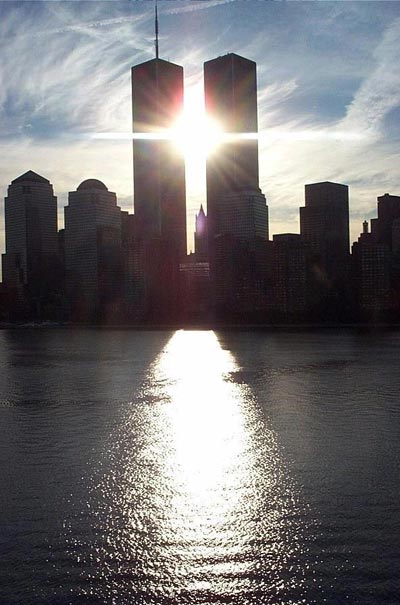
Just one decade ago, as the shadow of one structure fell from the Manhattan skyline, another erect itself in its place. Greyer than its predecessor, this new structure threw a dark hue over New York, America and the world.

Over the course of an intermittent ten years, the word terrorism has come to take a prevalent place in the life of many in the Western World. Those who are now coping with the legacy of 9/11, the so called 9/11 generation, live in a domain where attack comes in any form at any time, in order to strike fear into the civilised fronts of Europe, America and Asia.

Essentially, we live amidst the largest battle of ideologies since the Cold War.

Now, as in the period that saw a stalemate of superpowers, many people wonder whether today will be one that sees their daily life thrown into chaos. When once a battle was something that happened away from public view, not only is it now an inherent part of the media and our daily life, but it could impact personally. Whether friend, family member or threat to self, with attacks on trains in Spain, airports in Glasgow and tube systems in London, the shocking increase in the frequency, ingenuity and scale by which these terror threats manifest themselves means that peace is on hold.

Segregation is the first and most evident effect on society. Many Muslims in America recount the weeks and months and even years following the devastating attacks on the country that essentially left them without identity. Belonging to a community that took credit for the death of almost 3,000 people, these American citizens became shunned.

Some claim that their livelihoods were threatened, others lost jobs and racial insensitivity ensued with the rise of misunderstanding and hatred.

One day has come to personify an entire religion and cross section of society, without room for their defence.

Recently in France, there has been a ban on the burka in public places and those with professional careers. The French government advocates that this move is to enable people of all faiths to come closer, eliminating a potentially boundary between social groups. Others remain indignant and see it as a source of racism. Elsewhere, as the clean-up from riot torn Britain continues, there are a select number who laid blame on social divisions between ethnic minorities. These fragments that have broken away from daily society trace routes to problems established on that September morning in 2001.

Although subsequent wars in Iraq and Afghanistan have played out on a different continent, the psychological effects reach further. For those who know any serving member of the army, each day is a blessing, as no news is good news. Establishing Middle East war zones sets up a dichotomy by which there is a comfort that there is justice for the innocent people that lost their lives, yet the dangers of antagonism, overthrowing illusive figures and daily bombings adds to death tolls.

More importantly on home fronts, with Wootton Bassett ending its tour of duty as representative for those fallen, an entire town is bearing responsibility for public grief one last time. Across the Atlantic, one prison has become so intertwined with the myth of Army brutality in the name of public safety that there is a passive acceptance to its morals.

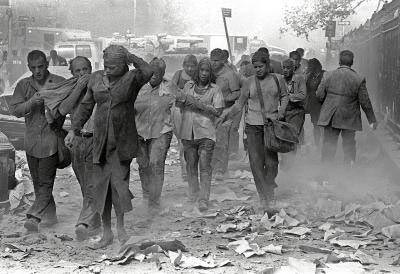
These are the truths of life post 9/11. Initial reactions to a plane hitting the North Tower were the cries of a tragic accident. Barely 15 minutes later, all such nativity and good nature was lost not only from those who lived in New York, but gradually across America and later Europe.

News channels now do not hesitate to question whether some unidentified disruption is the cause of a terrorist attack. Until September 2001, there would have largely been questions that came before this: what was known of the problem, or what were the authorities doing, or whether there would be a state of normality resumed soon?

Now: Is it a terrorist attack? Who claimed responsibility? What could have been done?

For all the expectations of attacks that are now a constant worry of the average person, still each extravagant declaration of a problem with a nation comes as a surprise. What did we learn from 9/11? Extremists still managed to successfully detonate a bomb in Spain. English police forces had tips of an upcoming attack on Underground facilities and yet services remained unprepared in the event. 

Norway, the latest victim, disbands the belief that only countries of certain proficiency and status on a global front are targets. Although only the actions of one man, the ripples of this double attack are testament as to how far social divisions are at a play on a global scale.

The worry is that such divisions are irreconcilable and beliefs incompatible.

From the ashes of ground zero, the ashes of dead businessmen and women, should instead rise a beacon of hope and a dedication, a pledge, that never again should deaths of innocent people be the bi-products of hatred.

However, this can never be the case if there remains a volatile system that constantly refers to broken social groups and minorities as outsiders.

Following 9/11, the role of the media should be to focus on stories and occasions wherein there has been a coming together, a conglomeration, of different segments of society. We all bear a responsibility to accept, understand and recognise the rights of individuals and groups and their ways of life.

Instead, in film, in press and on radio, the reverberated sound is one of hatred and denial. Hollywood has cashed in on a priceless tragedy. Blockbuster releases, such as ‘World Trade Centre’ and ‘Flight 93’, do not aid the public memory of the attacks on America. Rather they are demeaning to American citizens, whose lives were cut short, doing their jobs. In the press, we seek to lay blame solely on those in the East and quickly forget the role the West has played in previous decades; supplying arms and choosing sides is but all forgotten amongst the chaos.

Somewhat with bad taste, the humorous ‘4 Lions’ mockuments the plans of 4 would be terrorists. Despite the comedy film, it is this ironic take on something so serious that has a relaxed stance taken by public officials. If we are able to laugh in the face of adverse terror, why should we prevent it?

Media outlets are the voice of the 9/11 generation. Their function should be to allow a communication between those victims of attacks, to ease their pains and to bring society together.

A spectre of terror haunts the modern world. Whilst it is a unifying spirit, it is simultaneously a spirit of terrible trepidation and divisive deeds. Since its inception, this ghost of fear has served to make one group a scapegoat and one group a leader of peace. It lingers to separate world populous into those who are would be victims of terror and those who incite terror.

Instability abound, the Western world finds itself precariously balanced: for with power comes a duty of care. If it is to lead nations from the threat of external invasion, it firsts need look within and proactively protect its citizens.

9/11 serves as an unheeded warning. Most remain unprepared for an attack and many remain ignorant of the country and customs of those being invaded. The media breaches its own duty in not being a reliable source of information.

No longer can terrorism be swept under the rug: it is public domain.  

Currently, the Manhattan skyline is dominated by the spectre that stands at 1,368 ft. Soon, it will be joined at that height by World Trade Centre 1, or Freedom Tower. With Freedom comes the hope that the current ideology of terror will be washed by the waters of the fountain that circle the Twin Tower base: otherwise, there will progress a stalemate of fear, a waiting game of attack and consequence. 


Countries where there have been attacks with more than 20 victims since 2001.

"During the 1990s, world leaders looked at the mounting threat of terrorism, looked up, looked away, and hoped the problem would go away."
-John Boehner

Saturday, 3 September 2011

The Fast Food Song.


Two students stand in their kitchen, chatting about the day’s events and putting the finishing touches to their evening meals. Tempting smells of culinary delight waft through the house and soon have other members of the student community that share the kitchen reaching for their phones or a cheeky chip from a friend’s plate.

The reason? Whilst this idyllic scene of student camaraderie is the joy of every parent who wants their child to grow up, the truth is that the student has automatically diverted to the ever reliable takeaway service.

Diets of noodles and pizzas are not the healthy variant. This much is obvious. But their convenience is undeniable.

However, recent research suggests that most people are getting much more from the food they purchase in a hurry than they bargain for. Filling up on sat fats, salts and various additives, it appears fast food has not become as conscious of its content as is often advertised.

Colours achieved in many of the vended chicken tikka masala and sweet and sour chicken meals are due to colouring. A total of 223 takeaways nationwide failed to adhere to expected standards and consequently there is a great worry that the extent to which food is of subsidiary expectations will never be known. It was also added that around 20% of meals promoting themselves as free from nuts actually still contained the potentially lethal ingredient.

At minimum, caution is recommended by the Food Standards Agency.

The agency has called for a voluntary ban on artificial colourings including sunset yellow (E110), allura red (E129), tartrazine (E102) and ponceau 4R (E124) because of their reported link to hyperactivity in some children. This is because there are only restrictions and not blanket bans on these products.

However, some takeaways were found to even flout the recommended maximum amounts for these additives. Without regulation, it is difficult to ensure standards are maintained.

Councillor Paul Bettison, chairman of the Local Government Regulation Board which carried out the study of takeaway meals, said that the high levels of fat, salt and sugar in them were "truly shocking and unnecessary". He continued by adding “There's no excuse for illegal amounts of colouring and as for secretly using a cheaper type of meat, that's just shamefully ripping off customers.”

Of course, money is a big issue for students, especially with the impending price hike. But group together to buy some produce and sit down to eat your meals. It saves money and you make better friends having dedicated time together.

No one is expected to be a culinary whizz. However, the consequences of not trying to put a meal together could be much worse than a failed attempt over the stove.

Without being an advertiser, or promoter:
http://www.youtube.com/show/takeawaymytakeaway?s=1

Thursday, 1 September 2011

I Need A Dollar.


Recession has hit many in the country hard and the gap between rich and poor continues to grow into a chasm that will only be closed after several decades of continued effort.


Whilst just 5 years ago, Britons were amongst the better off peoples in the developed world, having more wealth per capita than Americans, the turmoil in economic banking has hit hard. In order to grind the recession to a halt, there need be revolution of the way the monetary systems correspond with each other: how far countries should integrate, banks make deals, loans be offered etc.

The Independent Commission on Banking is due to deliver a full report and recommendations on how to proceed in these turbulent times come September. However, in its Interim release, there was call for a ‘ring-fencing’ of bank operations.

John Vickers, who is leading the commission and is also the former chief economist to the Bank of England, outlined the suggestion in April. It would involve separating the retail operations of banks from the investment quarters. In so doing, it would be hoped that the taxpayer is firstly never again responsible for the blunderings of the multinational corporates, and also ensure a more stable safe haven for money deposits, by interest rates and bank credibility not affecting all customers to the same extent.

However the Government is under no obligation to implement any recommendations from Vickers.

Although the Commission was set up by the current parliament last year, it seems that there is already a shrugging of its findings, with ministers being shy to accept the report. There is no rush to go ahead with splitting up the sectors.

Of course, economic stability is not quite as simple as it was at the beginning of last century. Whilst countries only had interdependence on a few others, the globalisation of markets has led to a wide and often unstable allegiance of various countries. Whether these are markets for imports or exports, goods or employment, there is now a consensus that any changes need be implemented on a global scale never before witnessed.

With the Eurozone failing and a ban on cold selling, there is a certain unease. Across the pond, America’s credit rating has been downgraded. The giants of world revenue are tumbling.

The head of the British Bankers' Association, Angela Knight, has said that there needs to be a focus on the recovery first and the taxpayer second. She said that regulatory change could undermine the recovery, whilst John Cridland, director general of the CBI, added that "Taking action at this moment - this moment of growth peril, which weakens the ability of banks in Britain to provide the finance that businesses need to grow - is just to me barking mad,"
 
The question then is how to tackle the crisis.

Naturally, this has been the forerunner of all major economists over the past three years, but this is all the more relevant because just months ago, forecasters were once more predicting growth that was never yielded. There is no stability or predictability in the market. This in turn makes it even weaker. The circle continues so that faith in markets plummet, stocks fall, value is wiped from companies.

In this way, it is logically to assume the real resolve would be to add back confidence. This involves the banks interlending. This would have to be monitored, but if there was a free flow of money, there would be less economic danger of funds being tied down.

This would open new markets and revenues and allow customers to shop more freely, invest more freely, and trust more freely.

However, regulation is difficult due to the uncharacteristic nature of the markets. Any action could send it toppling or cause a bounce back and these extremities are believed too risky. Slow progression is favoured.

Whilst this may be advisable for now, regulation revolution is required if there is to be consumer confidence in money matters once more. The extent of lost revenue and wealth is overwhelming: there need be change to the structures of money lending. Banks can no longer be the only regulators.

Watch this video for an explanation regarding how the economic crisis could spread. Applicable to many countries in the Eurozone too: